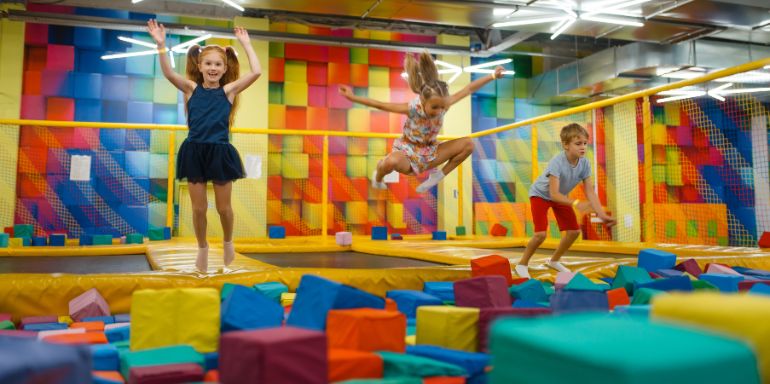
A booking system for activity centres manages climbing, trampolines, padel and classes in one schedule, keeps to the capacity of each area and lets guests book and pay online. That way you avoid overbookings and keep an eye on utilisation, even when a lot is happening at once.
The complex day-to-day of an activity centre
If you run an activity centre, you offer many different experiences, such as climbing, trampolines, padel and fitness. At the same time, your halls, courts, equipment and staff need to be well used. Many operators assume they can manage this with the phone, spreadsheets or simple systems. In practice, it gets difficult on busy days, if not before.
Why simple solutions are not enough
For an activity centre, it is essential to have a system that meets the needs of guests and team alike. Offering lots of activities is not enough. Your guests also need to be able to book them easily, overbookings must be ruled out, and the utilisation of every area has to be right.
One of the most underestimated opportunities in the industry is integration. A booking system can be connected to other systems, such as payment providers, the till, customer management and email. Then your team never has to enter anything twice, your guests get a seamless booking experience, and you get figures you can use to improve your processes in a targeted way.
What to look for when choosing a system
- Capacity per area. Every hall, court and class has its own limits, and the system keeps to them.
- Time slots and single tickets. Some activities run in fixed time slots, others with open entry. Both should be possible in the same system.
- Groups and packages. Children's birthday parties, school classes and company events book several activities at once.
- Online payment. Guests pay when they book, with a deposit if you prefer.
- Automatic messages. Confirmations, reminders and notices about changes go out without your team lifting a finger.
- Integrations. Your till, accounting and payment provider work together with the booking system.
Getting started does not have to be complicated
Another common assumption is that introducing a new system is a lot of work and disrupts operations. Today, many solutions are designed so they can be introduced without a long interruption. How quickly a new system is ready to use depends mainly on your activities and the data you already have. Ask the provider for a concrete timeline. Once the system is running, it takes over many tasks your team used to do by hand.
A digital system can also noticeably improve your customer service. The customer experience often begins long before your guests walk into your activity centre. The easier it is for guests to find and book their activity, the happier they are. Automatic messages, such as reminders of upcoming bookings or notices about changes, keep your guests up to date.
The article Online payment for bookings explains how to let guests pay in advance. You can read how to organise large groups in the article on group bookings.
Choose a solution that suits your industry
The biggest benefit comes from a system that is made for leisure venues and manages all activities and areas centrally. As an activity centre operator, it is tempting to stick with tried-and-tested ways of working. But your guests' expectations change, and a good booking system helps you introduce new offers and give your guests better service.
Ready for the activity centre of the future?
A well-thought-out booking system makes your processes more efficient and improves utilisation. As a next step, check which of your activities you can already make bookable online and where you get the most questions today.
An example of a booking system developed for activity centres and other leisure venues is Flexybox.